Radon Testing in St. Clair Shores, MI
Radon testing for homes and commercial buildings across St. Clair Shores and Macomb County, with clear results and straightforward next steps.
5-Star Rated Inspection Service
- Licensed & Professional
- Fast Turnaround
- Detailed Reports
Get Your Radon Testing Quote
Serving Southeast
Michigan Since 2020
Residential &
Commercial Inspections
Accurate
Property Valuations
Trusted by
Local Buyers & Investors
Professional Radon Testing Services in St. Clair Shores
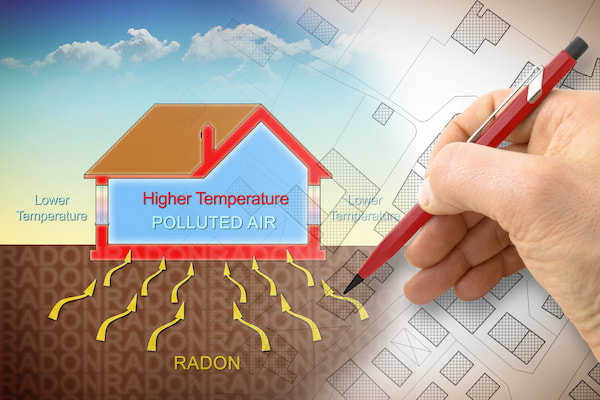
Outdoor radon levels are not the question. The gas disperses in open air to concentrations of no practical consequence, and it becomes relevant only where it collects inside an enclosed building, which is also where people spend the great majority of their time.
So the measurement is taken indoors, in the part of the building people occupy. Radon is radioactive, colourless and odourless, and what accumulates inside a St. Clair Shores property depends on that structure, which is why a monitor is placed in it and left to record across a defined period.

What’s Included in Our Radon Testing Process
A radon test has defined bounds and the report states them: the concentration of the gas in the air, at a named position within the building, across a stated period, under recorded conditions. Everything the result claims sits inside those limits and nothing is implied beyond them.
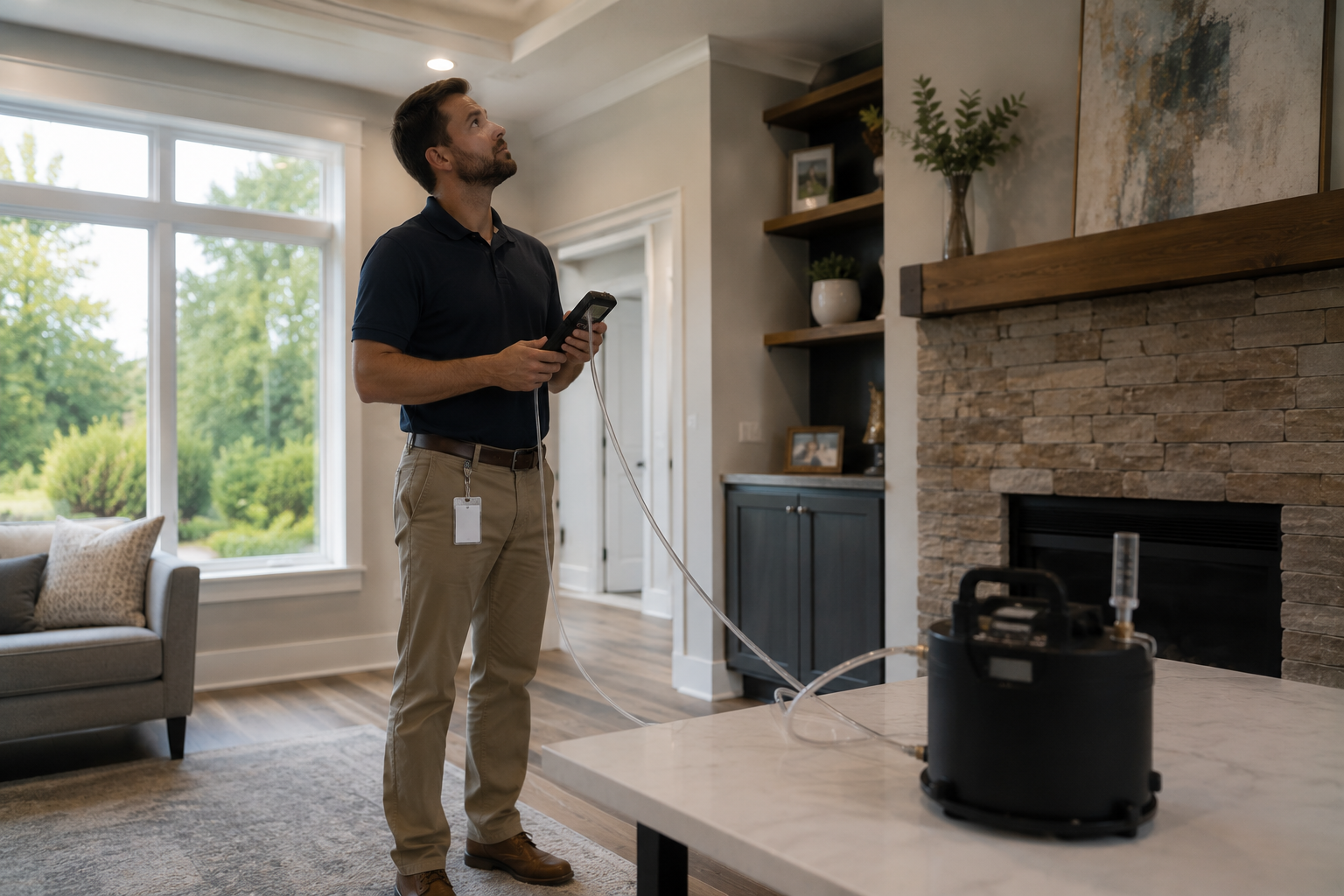
Producing it means calibrated monitoring equipment placed according to protocol, an uninterrupted run of the required length, and analysis of the recorded data. The St. Clair Shores property receives a figure that can be relied on for precisely what it covers.
What Happens During a Professional Radon Test?
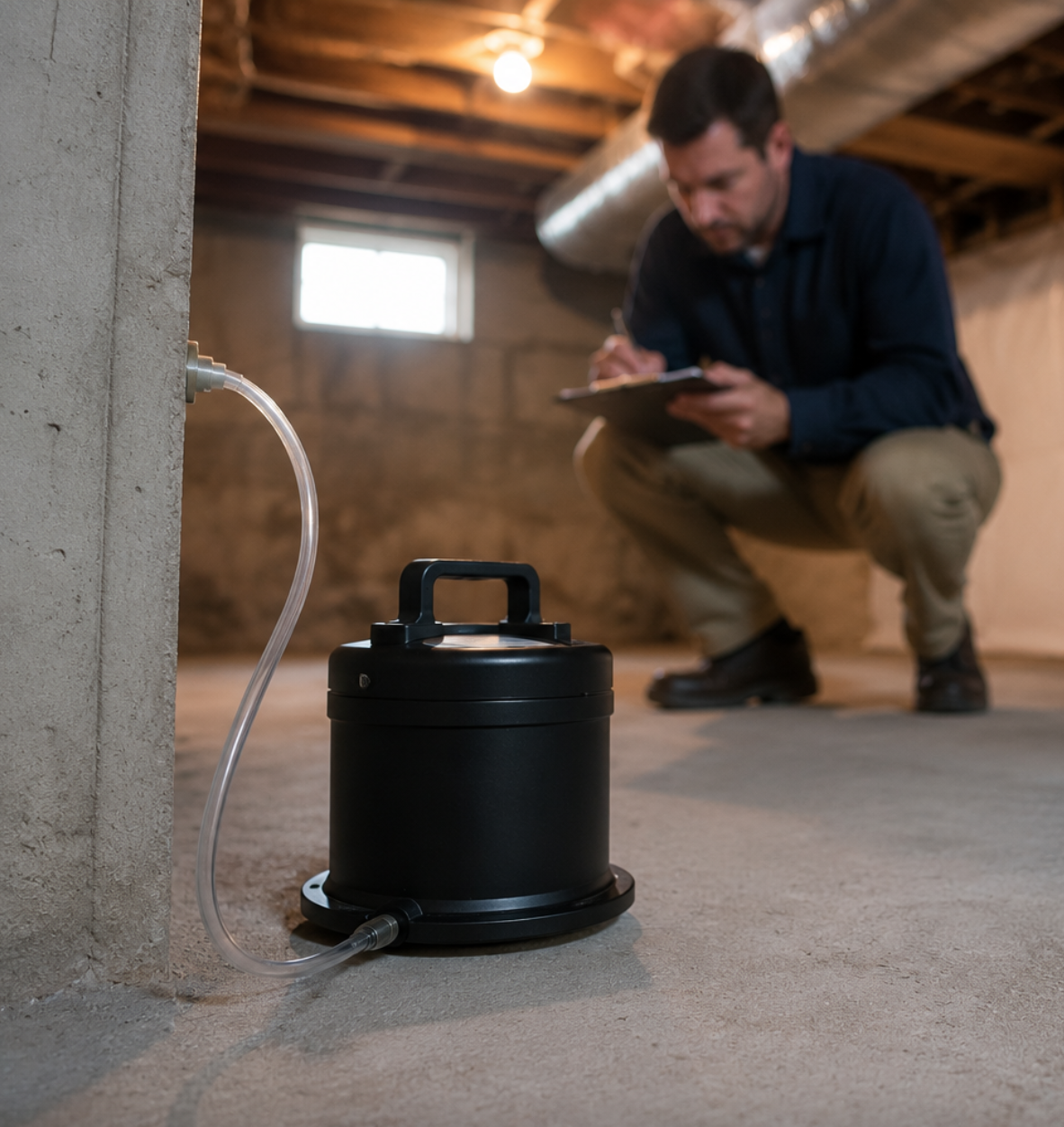
What the household is asked for amounts to leaving things as they are. The building stays closed apart from normal entry and exit, with windows shut and no extra ventilation introduced, and the monitor stays exactly where it was placed rather than being moved or tidied away. Everything else inside the St. Clair Shores property carries on as usual. The device sits in the lowest occupied level, clear of drafts, vents and exterior doors, and runs for the required period, commonly around 48 hours for a short-term test, before collection and analysis. The steps below cover the sequence.
Proper Test Placement
Testing equipment is placed in an appropriate location within the property to collect meaningful measurements.
Radon Level Monitoring
The testing device monitors radon levels during the required testing period. Following proper testing conditions is important for obtaining useful results.
Data Review
After the testing period is complete, the collected information is reviewed to determine the measured radon concentration.
Clear Results
You receive results that explain the measured radon level so you can understand whether additional action should be considered.
Radon Testing Matters Before Buying a Home
The radon level of a property applies to whoever occupies it, which in a purchase means the buyer rather than the seller. Exposure transfers with the keys, and it does so quietly, without any point at which the transfer is noted or acknowledged by anyone.
The inspection period is when that can still be addressed. A St. Clair Shores property tested then produces a figure while the terms remain open, so it can be raised with the seller, reflected in the price, or used to step away from the purchase.
Testing before ownership transfers allows you to:
- Establish the level with a measurement
- Respond to an elevated reading in time
- Negotiate on evidence
- Consult appropriate professionals
- Decide on mitigation before completion
What Do Radon Test Results Mean?
Radon is measured in picocuries per litre of air (pCi/L). The United States Environmental Protection Agency recommends taking action to reduce radon when the level is 4 pCi/L or higher, and states that no level of radon exposure is known to be completely safe. Beneath that level no reduction is called for, though it can be arranged.
Those two statements are best read together. The first marks a point at which action is recommended; the second is why a result below it is worth keeping on file rather than treating as the end of the matter.
Why Choose Us for Radon Testing?
Radon offers nothing to inspect and no visible proof that a test was carried out properly, so the method behind the figure is what the whole result rests on. We use calibrated equipment, place it exactly where protocol requires, keep the measurement period continuous, document the conditions the run took place under, and report the concentration with the published action level alongside it.
Testing also sits naturally beside the rest of the assessment of a property. Booked with a mold inspection in St. Clair Shores, the monitoring period runs inside the same due diligence window, and the two sets of findings can be weighed together rather than separately.
Professional Testing
We use professional radon testing procedures to measure radon levels accurately and provide reliable information about the property.
Clear and Easy to Understand Results
Radon numbers can be confusing. We provide straightforward results so you can understand the measured radon level and determine whether further action should be considered.
Careful Testing Process
Proper equipment placement and testing conditions matter. We follow appropriate procedures throughout the testing process to help provide meaningful results.
Frequently Asked Questions
What is radon?
Radon is a naturally occurring radioactive gas produced by the breakdown of uranium in soil, rock, and water. It can enter buildings through openings in areas that contact the ground and accumulate indoors, where it cannot be seen, smelled, or tasted.
How does radon get inside?
Radon levels vary from property to property, and elevated levels have been found in homes throughout Michigan. There is no way to predict a specific Detroit home’s radon level from its age, condition, or location. Testing the individual property is the only reliable way to know.
Should I test during a purchase?
Yes. Radon testing can be an important part of real estate due diligence in Detroit. Testing before closing gives you information about measured radon levels while you are still evaluating the property and can still address the results within your transaction.
How long does the test take?
Yes. Radon is not limited to old or poorly maintained properties. Newer homes can also have elevated radon levels because radon primarily originates from the ground beneath and around a building rather than from the building itself.
Can new construction have radon?
No. Radon often enters through areas in contact with the ground, but it can move throughout a building. A property should not be assumed to be free from elevated radon simply because it does not have a traditional basement.
What if levels come back high?
An elevated result is information, not a dead end. Radon mitigation systems are commonly used to reduce indoor radon levels. Your report gives you the measured numbers you need to discuss appropriate next steps with a qualified radon mitigation professional.