
Understanding the Property Inspection Reporting Process
Understanding the Property Inspection Reporting Process
Property inspection reports give buyers, sellers, owners, and investors a clear snapshot of a building’s condition. By translating technical findings into straightforward summaries, these reports help stakeholders make smarter financial decisions. This guide explains how inspection reports are structured, why they matter, and how to use them to reduce risk, improve negotiation outcomes, and plan repairs or renovations. Many people struggle to interpret inspection results; our goal is to make the process easier, so you leave with practical next steps instead of questions.
What Is a Property Inspection Report and Why Is It Important?
A property inspection report is a concise, professional summary prepared after a thorough property evaluation. It identifies existing conditions and potential problems that could affect safety, use, or market value. Buyers rely on these reports to understand hidden costs; sellers use them to set realistic expectations. The clarity and detail in a well-prepared report protect all parties and support better investment choices. For more information on how we can help, visit our property inspection services.
What Key Components Are Included in a Home and Commercial Inspection Report?
Inspection reports typically cover the core systems and visible condition of a property. Common sections include:
- Structural Integrity: Evaluation of the building’s frame, foundation, and load-bearing elements.
- Electrical Systems: Notes on wiring, panels, outlets, and any safety concerns.
- Plumbing Systems: Inspection of supply lines, drains, fixtures, and evidence of leaks.
- Roofing Conditions: Assessment of roof coverings, flashing, and signs of water intrusion.
By documenting these areas, reports give a practical picture of the property’s condition and help prioritize repairs and negotiations.
How Do Inspection Reports Influence Real Estate Decisions?
Inspection reports often change the terms or direction of a transaction. For buyers, findings can justify repair requests, price adjustments, or contingency clauses. For sellers, reports clarify what issues may affect marketing and pricing strategy. Above all, transparency in reporting reduces the chance of surprise expenses after closing and supports more confident decision-making.
How Do You Read and Interpret the Sections of a Property Inspection Report?
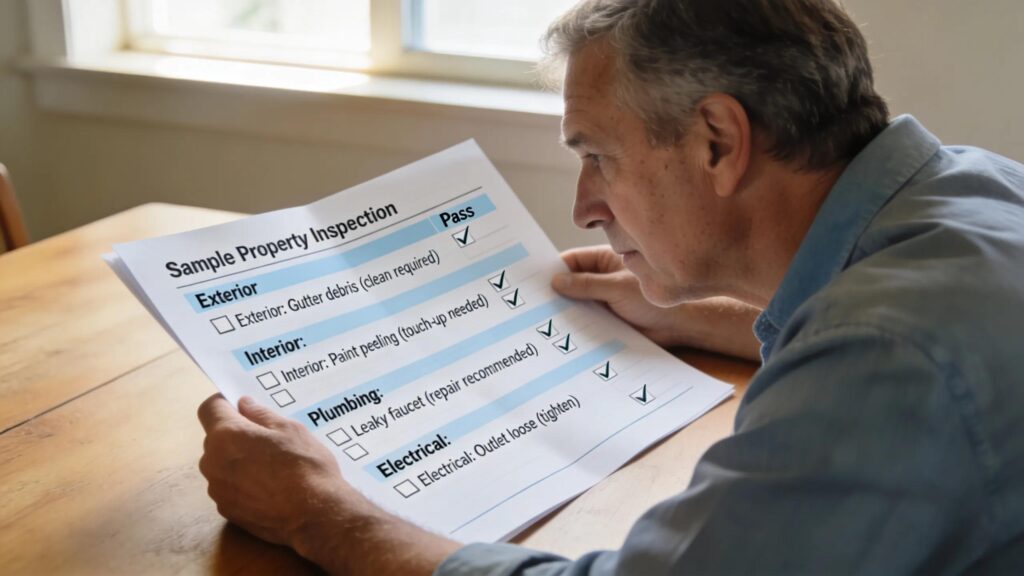
Reading a report becomes easier once you know its typical structure: a summary of major concerns, detailed observations with photos, and recommended actions. Start with the summary to understand the biggest priorities, then review the detailed sections for context and cost implications.
How Are Roofing, Foundations, Electrical, and Plumbing Evaluated in Reports?
Inspectors check roofs and foundations for leaks, cracks, and signs of movement that could compromise stability. Electrical reviews confirm whether wiring and panels meet basic safety expectations. Plumbing checks look for leaks, water pressure problems, and drainage issues. Understanding how each system is evaluated helps you prioritize safety and budget for necessary maintenance.
What Do Common Terms and Ratings in Inspection Reports Mean?
Reports use terms and simple ratings to communicate condition quickly. For example: “deficient” flags an issue that needs correction, while “marginal” signals a condition that should be monitored. Familiarity with the report’s terminology makes it easier to weigh urgency and cost when planning next steps.
Which Common Issues Are Identified in Residential and Commercial Property Inspections?
Inspections regularly reveal a handful of recurring issues, such as:
- Water Damage: Evidence of past or ongoing leaks that may require remediation.
- Structural Damage: Settling, cracks, or other issues that can affect stability.
- Outdated Electrical Systems: Wiring or equipment that falls short of modern safety expectations.
Spotting these problems early allows owners and buyers to address them before they grow into larger expenses.
What Structural and Maintenance Problems Should Clients Expect to See?
Clients commonly encounter aging roofs, worn HVAC systems, and deteriorating plumbing components. These items usually show up as maintenance priorities rather than immediate deal-breakers, but they can influence timelines and budgets. Regular inspections help keep maintenance manageable and predictable.
How Are Environmental Hazards Like Radon and Mold Addressed in Reports?
Inspectors handle environmental hazards with targeted testing and clear recommendations. Radon is tested with specialized equipment and reported against EPA guideline levels; high readings typically include mitigation options. Mold concerns are investigated where moisture is present, often with air or surface sampling and remediation advice. If you want detailed information on radon testing, see our radon testing page.
How Does the Property Inspection Evaluation Process Differ Between Residential and Commercial Properties?
Residential inspections generally focus on safety, habitability, and livability for occupants. Commercial inspections are broader and more technical, often examining structural capacity, code compliance, and features critical to business operations. For businesses, a tailored commercial property inspection is important to understand operational impact and liability.
What Are the Unique Considerations in Commercial Property Inspections?
Commercial inspections must account for zoning, occupancy classification, ADA considerations, and industry-specific code requirements. Inspectors also evaluate systems that support business functions—such as specialized HVAC, fire protection, and heavy electrical loads—to ensure the property meets its intended use.
How Are Residential Inspection Findings Summarized Differently Than Commercial Ones?
Residential reports emphasize homeowner safety and comfort, while commercial reports focus on investment performance, operational risk, and regulatory compliance. The intended use of the property determines which findings receive priority and how recommendations are framed.
How Can Clients Use Property Inspection Reports Effectively in Real Estate Transactions?
Use inspection reports as a practical tool during negotiations: clarify which repairs are essential, estimate repair costs, and document agreed-upon remedies in contracts. Open communication between buyers, sellers, and agents ensures reports support fair and transparent outcomes.
What Steps Should Buyers, Sellers, and Investors Take When Reviewing Reports?

When reviewing a report, take these steps:
- Thoroughly Read Findings: Begin with the summary, then review details and photos.
- Discuss with Professionals: Ask your agent, contractor, or inspector for clarification and cost estimates.
- Plan for Future Maintenance: Use the report to set priorities and budget for repairs.
Following these steps helps you negotiate with confidence and plan realistically for ownership or investment.
How Do Inspection Findings Impact Negotiations and Investment Risk Assessment?
Inspection findings can be leverage in negotiations or a prompt to adjust price expectations. Buyers may seek concessions or repairs; sellers may decide to complete work before listing. Beyond price, inspection reports inform a clearer risk profile, helping investors and owners forecast maintenance costs and liability exposure.
What Specialized Services Enhance Property Inspection Reports for Safety and Accuracy?
Specialized testing—such as radon measurement and professional mold inspections—adds depth to standard reports. These services reveal environmental risks that a basic walkthrough might miss and provide documented results to guide remediation or negotiation. For more on mold assessment, see our mold inspections page.
Why Is Radon Testing Included and How Are Results Reported?
Radon testing is included because elevated radon poses long-term health risks. Results are presented with clear metrics and compared to EPA action levels. If readings exceed recommended thresholds, the report outlines mitigation options and next steps.
What Is Involved in Mold Inspections and How Are Results Communicated?
Mold inspections combine visual assessment with moisture mapping and, when appropriate, air or surface sampling. Reports detail locations of concern, likely causes, mold types if identified, and recommended remediation to restore safe indoor conditions.
Clients who are satisfied with our work often share their experiences—visit our testimonials to read their stories.
For homeowners, our dedicated home inspections cover every critical component to help you buy, sell, or maintain with confidence.