Radon Testing in Ann Arbor, MI
Radon testing for homes and commercial buildings across Ann Arbor and Washtenaw County, with clear results and straightforward next steps.
5-Star Rated Inspection Service
- Licensed & Professional
- Fast Turnaround
- Detailed Reports
Get Your Radon Testing Quote
Serving Southeast
Detroit Since 2020
Residential &
Commercial Inspections
Accurate
Property Valuations
Trusted by
Local Buyers & Investors
Professional Radon Testing Services
Professional Radon Testing Services in Ann Arbor
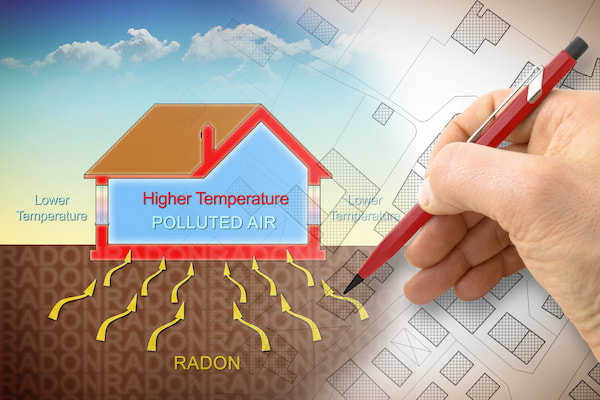
Radon is a naturally occurring radioactive gas that moves out of the ground and into buildings through foundations, floor joints and service penetrations. It cannot be seen, smelled or tasted, and it produces no symptom in a building that an occupant or an inspector could notice. Its presence is established by measurement and by nothing else.
Levels also vary between individual properties rather than across an area, so a figure from one Ann Arbor address says very little about the one beside it. Construction, soil contact, ventilation and how the building is used all shape what accumulates inside. Testing the specific property replaces a general impression with a number that belongs to that address.
What’s Included in Our Radon Testing Process

What’s Included in Our Radon Testing Process
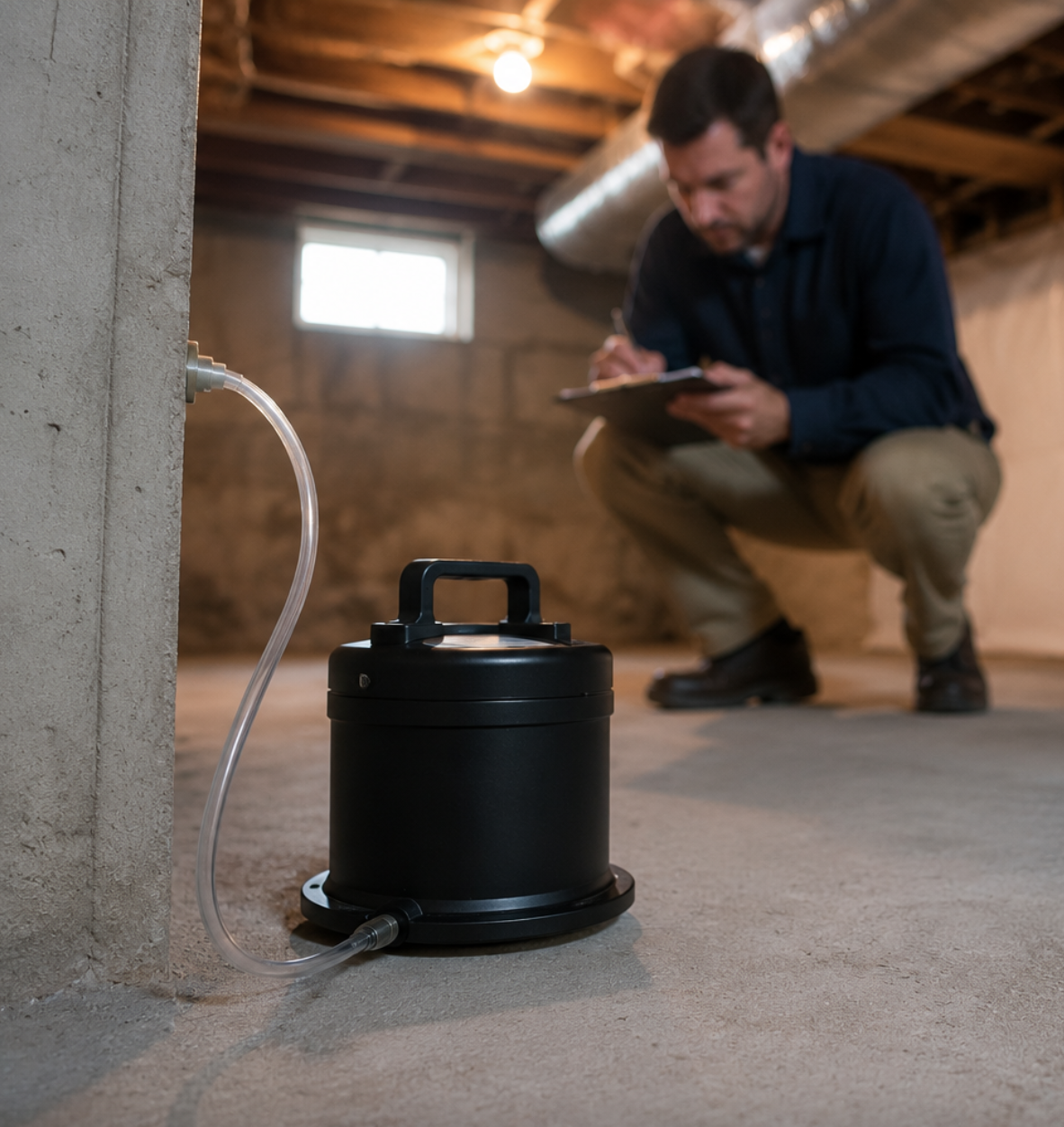
Every radon test we carry out uses professional-grade monitoring equipment and follows established measurement procedure: correct placement, an undisturbed run of the required length, analysis of the recorded data, and a written report giving the concentration in picocuries per litre with an explanation of what the figure represents.
Method is what separates a usable result from a rough impression. Where a monitor sits, how long it runs and whether the building stayed closed all move the number it produces, which is why those conditions are documented with the reading. Consistency also makes results comparable, so a retest years later measures a genuine change rather than a difference in how the two tests were run.
What Happens During a Professional Radon Test?
A professional radon test measures the concentration of the gas inside the building under controlled conditions rather than under whatever conditions happen to prevail. The monitor is positioned in the lowest occupied level, clear of drafts and disturbance, and left in place for the required period, commonly around 48 hours for a short-term test. Throughout that window the Ann Arbor property is kept closed apart from normal entry and exit, since ventilation lowers the concentration a device records and produces a reading that understates ordinary conditions. The monitor is then collected and its data analysed across the whole period. The steps below set out how that runs from booking to result.
Proper Test Placement
Testing equipment is placed in an appropriate location within the property to collect meaningful measurements.
Radon Level Monitoring
The testing device monitors radon levels during the required testing period. Following proper testing conditions is important for obtaining useful results.
Data Review
After the testing period is complete, the collected information is reviewed to determine the measured radon concentration.
Clear Results
You receive results that explain the measured radon level so you can understand whether additional action should be considered.
Radon Testing Matters Before Buying a Home
Radon Testing Matters Before Buying a Home
Buyers assess a property on what can be seen, measured or inspected, and radon falls outside all three until someone tests for it. There is no visible sign, no smell, and no relationship between how well a house presents and what its radon level turns out to be. Testing the Ann Arbor property under offer is the only way to bring that into the picture.
The value lies in the sequence. Before closing, a result is negotiable material: grounds for a price adjustment, a request that mitigation be installed, or a decision to step back. After closing it is a maintenance item you own outright, at your own cost and on your own timetable.
Professional radon testing before closing can help you:
- Understand measured radon levels inside the property
- Identify elevated levels before taking ownership
- Make a more informed real estate decision
- Discuss results with the appropriate professionals
- Determine whether radon mitigation should be considered
What Do Radon Test Results Mean?
What Do Radon Test Results Mean?
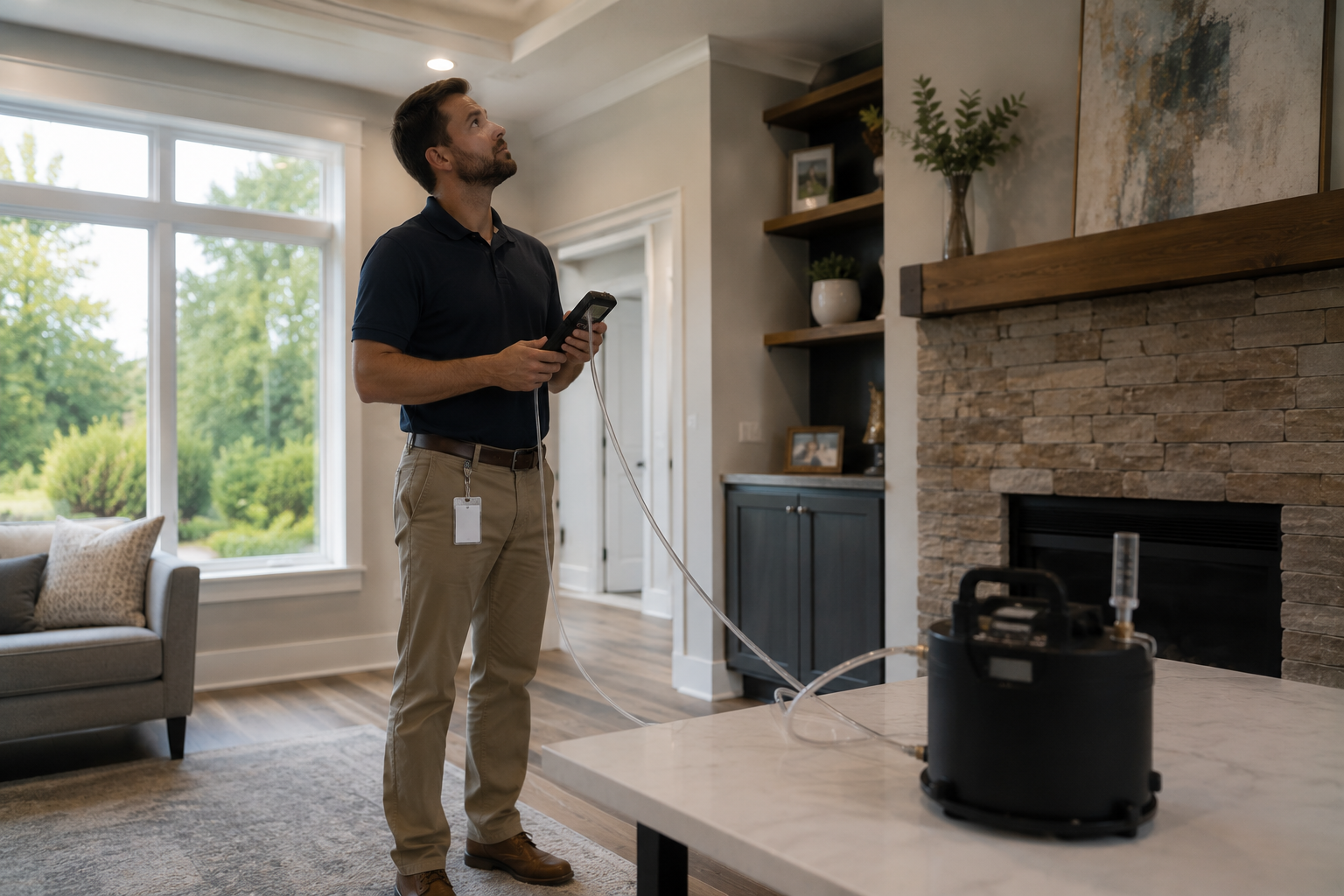
Radon concentration is expressed in picocuries per litre of air (pCi/L). The United States Environmental Protection Agency recommends taking action to reduce radon when the level reaches 4 pCi/L or higher, and states that no level of radon exposure is known to be completely safe. Results below that threshold call for no reduction, though reduction can still be considered.
The threshold is a decision point rather than a verdict. A result close to it may warrant a longer-term test to see how the property behaves across seasons; a clearly elevated one points toward mitigation. The report explains where the reading sits and what that indicates, so the number is not left to be interpreted alone.
Why Choose Us for Radon Testing?
What matters with radon testing is whether the test was run properly, because everything else follows from that. We place the monitor to protocol, keep the measurement period intact, document the conditions alongside the reading, and set out the result plainly instead of leaving a number to be interpreted.
It also fits naturally into a wider assessment of the property. Testing can be scheduled with a home inspection in Ann Arbor, which keeps the monitoring period inside the same due diligence window as the rest of the survey rather than adding time to it.
Professional Testing
We use professional radon testing procedures to measure radon levels accurately and provide reliable information about the property.
Clear and Easy to Understand Results
Radon numbers can be confusing. We provide straightforward results so you can understand the measured radon level and determine whether further action should be considered.
Careful Testing Process
Proper equipment placement and testing conditions matter. We follow appropriate procedures throughout the testing process to help provide meaningful results.
Frequently Asked Questions
What is radon?
Radon is a naturally occurring radioactive gas produced by the breakdown of uranium in soil, rock, and water. It can enter buildings through openings in areas that contact the ground and accumulate indoors, where it cannot be seen, smelled, or tasted.
Do Ann Arbor homes have radon problems?
Radon levels vary from property to property, and elevated levels have been found in homes throughout Michigan. There is no way to predict a specific Detroit home’s radon level from its age, condition, or location. Testing the individual property is the only reliable way to know.
Should I test for radon before buying a home in Ann Arbor?
Yes. Radon testing can be an important part of real estate due diligence in Detroit. Testing before closing gives you information about measured radon levels while you are still evaluating the property and can still address the results within your transaction.
Can a newly built home have radon?
Yes. Radon is not limited to old or poorly maintained properties. Newer homes can also have elevated radon levels because radon primarily originates from the ground beneath and around a building rather than from the building itself.
Is radon only a basement problem?
No. Radon often enters through areas in contact with the ground, but it can move throughout a building. A property should not be assumed to be free from elevated radon simply because it does not have a traditional basement.
What happens if my radon test comes back high?
An elevated result is information, not a dead end. Radon mitigation systems are commonly used to reduce indoor radon levels. Your report gives you the measured numbers you need to discuss appropriate next steps with a qualified radon mitigation professional.