Radon Testing in Plymouth, MI
Radon testing for homes and commercial buildings across Plymouth and Wayne County, with clear results and straightforward next steps.
5-Star Rated Inspection Service
- Licensed & Professional
- Fast Turnaround
- Detailed Reports
Get Your Radon Testing Quote
Serving Southeast
Michigan Since 2020
Residential &
Commercial Inspections
Accurate
Property Valuations
Trusted by
Local Buyers & Investors
Professional Radon Testing Services in Plymouth
People investigate things for reasons: a smell, a stain, a noise, a bill that looks wrong, something a neighbour mentioned. Radon triggers none of them. It produces no symptom in a building and no prompt of any kind, which is the plain reason it goes unchecked rather than any failure of attention.
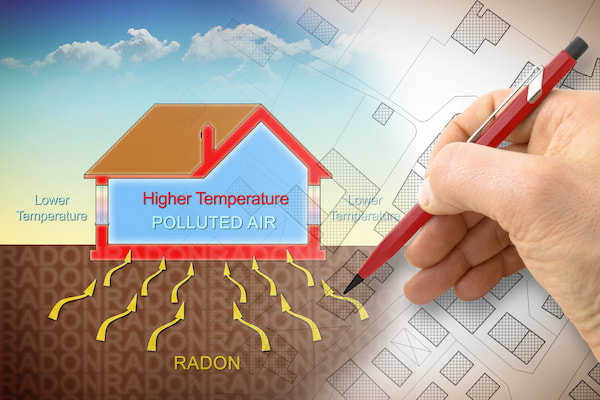
The gas is radioactive, colourless and odourless, and it enters where a Plymouth building meets the ground. Because nothing will ever prompt the question, it has to be asked deliberately, and it is answered by leaving a monitor in the property for a defined period.

What’s Included in Our Radon Testing Process
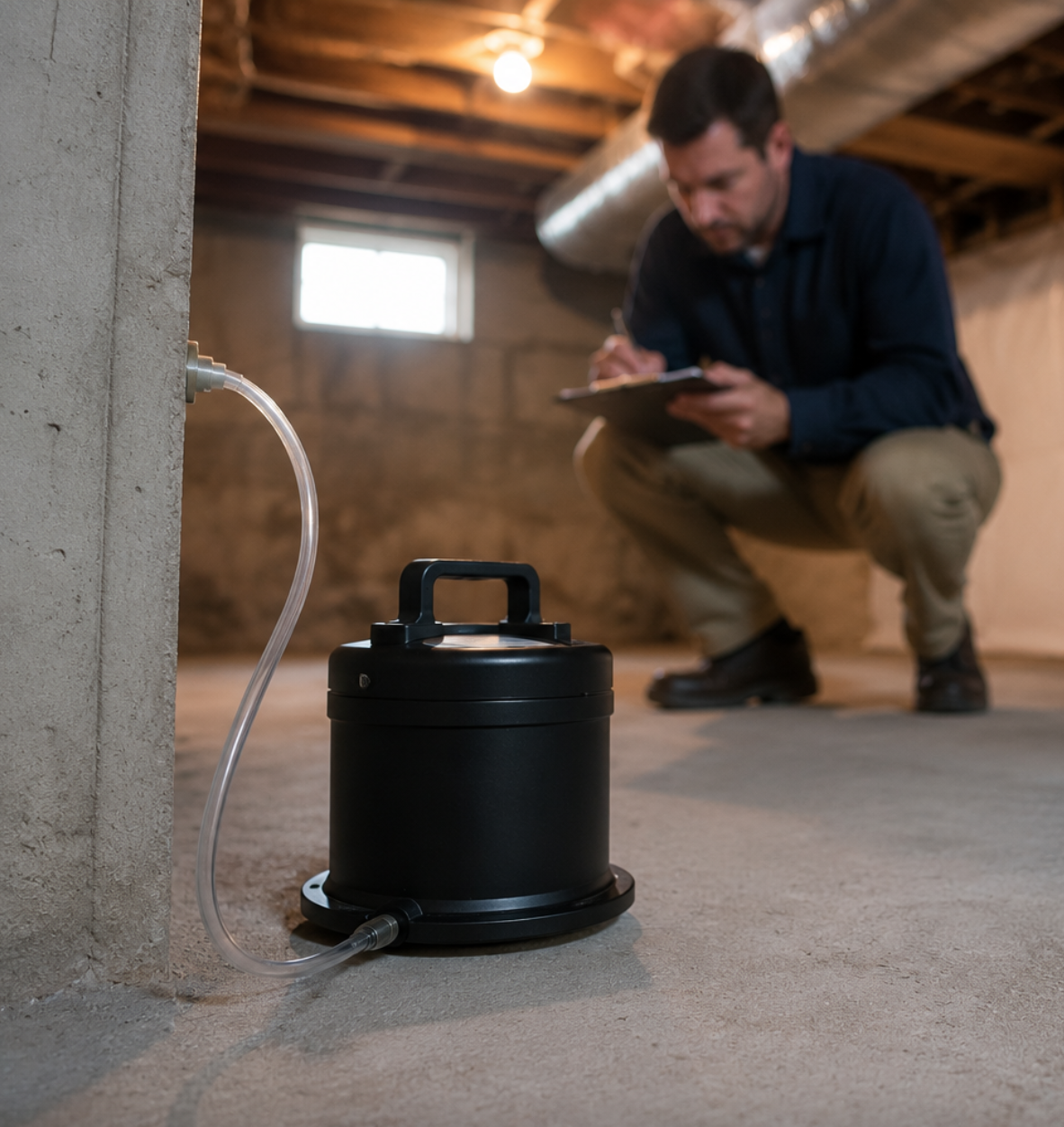
Placement and duration are set by protocol and are not negotiable. The monitor goes where the requirements say it goes and runs for as long as they say it runs, because a reading taken in a more convenient spot or over a shorter window is a different measurement and cannot be judged against the same threshold.
Within that, the work is calibrated equipment, analysis of the recorded data once the period closes, and a written result for the Plymouth property giving the concentration in picocuries per litre with conditions and explanation attached.
What Happens During a Professional Radon Test?
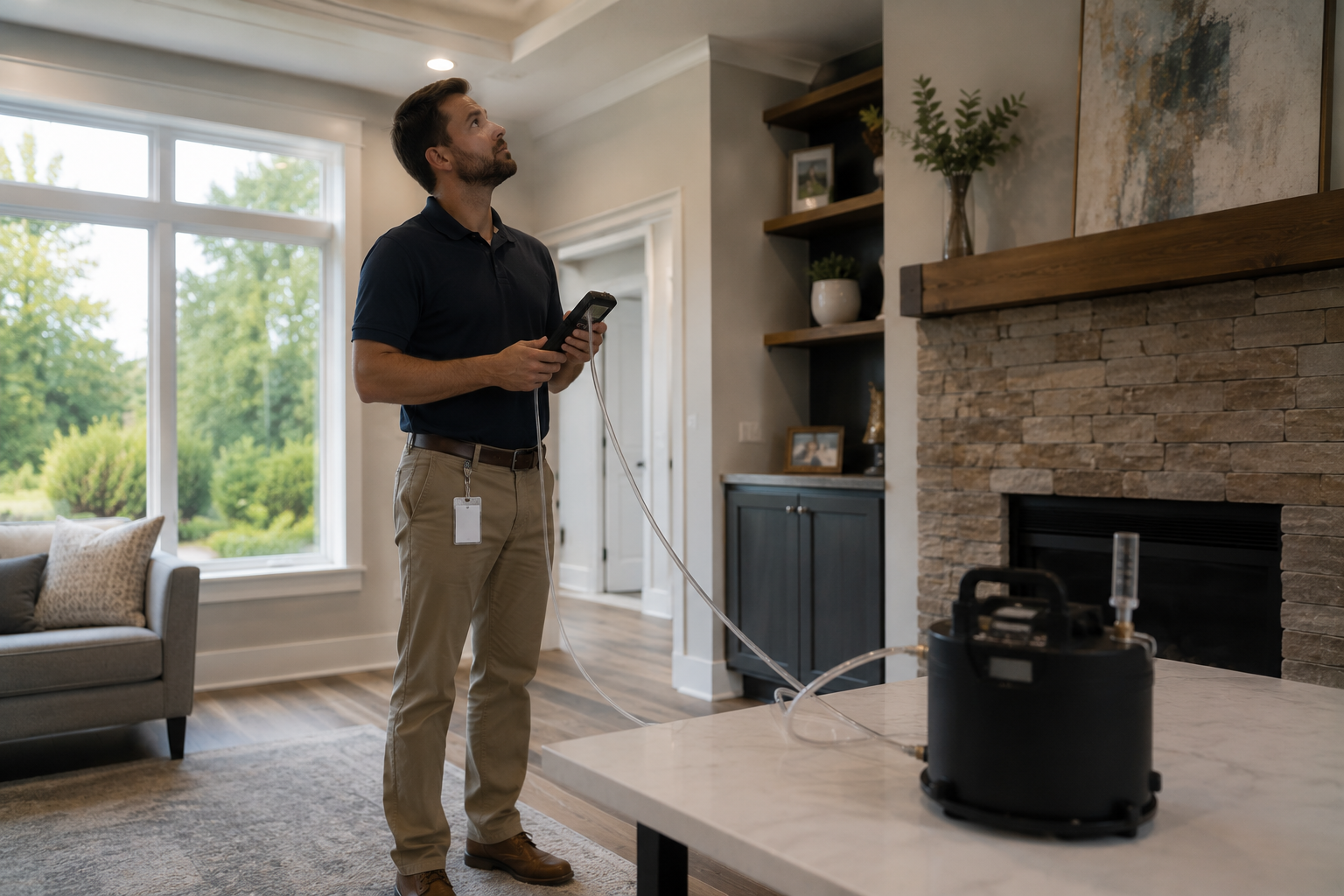
Access is worth thinking about before the test starts, particularly where a property is empty. Closed-building conditions have to hold for the whole measurement period, and the monitor needs to be placed and later collected, so both visits are arranged in advance. The device sits in the lowest occupied level of the Plymouth property, clear of drafts, vents and exterior doors, and runs for the required period, commonly around 48 hours for a short-term test, with the building kept closed apart from normal entry and exit. Its recorded data is then analysed across the run. The steps below set out the sequence.
Proper Test Placement
Testing equipment is placed in an appropriate location within the property to collect meaningful measurements.
Radon Level Monitoring
The testing device monitors radon levels during the required testing period. Following proper testing conditions is important for obtaining useful results.
Data Review
After the testing period is complete, the collected information is reviewed to determine the measured radon concentration.
Clear Results
You receive results that explain the measured radon level so you can understand whether additional action should be considered.
Radon Testing Matters Before Buying a Home
The awkwardness of raising radon is usually imagined rather than real. It is a standard measurement with a published benchmark, it takes days rather than weeks, and the request is for information that neither party currently holds.
What is not recoverable is the timing. A Plymouth property tested inside the inspection period produces a figure while the seller is still party to the transaction, so it can be reflected in the price, answered with mitigation, or used to withdraw. Tested afterwards, the same figure has nowhere to go.
Testing before closing means you can:
- Know the measured level for the property
- Act on an elevated result while you still have leverage
- Decide with information rather than assumption
- Discuss the finding with professionals
- Weigh whether mitigation should be arranged
What Do Radon Test Results Mean?
Results are given in picocuries per litre of air (pCi/L). The United States Environmental Protection Agency recommends taking action to reduce radon when the level is 4 pCi/L or higher, and states that no level of radon exposure is known to be completely safe. Nothing must be done under that level, though reduction can be arranged.
What the reading asks for depends on how far it sits from the threshold. Near the line, repeating or extending the measurement usually comes first, since a short test covers a limited window. Well above it, mitigation becomes the subject. The report says which case applies.
Why Choose Us for Radon Testing?
A radon result rests entirely on how it was produced, because nothing in the building can confirm it. We use calibrated equipment, follow the placement and duration protocol, protect the measurement period from disturbance, and report the concentration with its conditions and the action level alongside.
Where the property is vacant or access is limited, arranging the test with a mold inspection in Plymouth is the simpler route, since the visits to place and collect the monitor can be fitted around access that is already being organised.
Professional Testing
We use professional radon testing procedures to measure radon levels accurately and provide reliable information about the property.
Clear and Easy to Understand Results
Radon numbers can be confusing. We provide straightforward results so you can understand the measured radon level and determine whether further action should be considered.
Careful Testing Process
Proper equipment placement and testing conditions matter. We follow appropriate procedures throughout the testing process to help provide meaningful results.
Frequently Asked Questions
What is radon?
Radon is a naturally occurring radioactive gas produced by the breakdown of uranium in soil, rock, and water. It can enter buildings through openings in areas that contact the ground and accumulate indoors, where it cannot be seen, smelled, or tasted.
How does radon get inside?
Radon levels vary from property to property, and elevated levels have been found in homes throughout Michigan. There is no way to predict a specific Detroit home’s radon level from its age, condition, or location. Testing the individual property is the only reliable way to know.
Should I test during a purchase?
Yes. Radon testing can be an important part of real estate due diligence in Detroit. Testing before closing gives you information about measured radon levels while you are still evaluating the property and can still address the results within your transaction.
How long does the test take?
Yes. Radon is not limited to old or poorly maintained properties. Newer homes can also have elevated radon levels because radon primarily originates from the ground beneath and around a building rather than from the building itself.
Can new construction have radon?
No. Radon often enters through areas in contact with the ground, but it can move throughout a building. A property should not be assumed to be free from elevated radon simply because it does not have a traditional basement.
What if levels come back high?
An elevated result is information, not a dead end. Radon mitigation systems are commonly used to reduce indoor radon levels. Your report gives you the measured numbers you need to discuss appropriate next steps with a qualified radon mitigation professional.