Choose the Best Commercial Property Valuation Service Today

How to Choose the Right Commercial Property Valuation Service
By Estates Inspections
Picking the right commercial property valuation service matters. It shapes investment choices, affects negotiation leverage, and can change financial outcomes for buyers, sellers, and lenders. Knowing what to look for—qualifications, report clarity, local market insight, and inspection depth—helps you make decisions with confidence. This guide walks through the factors to weigh when choosing a valuation provider, explains the technical parts of a valuation, shows how inspection services fit in, and offers tips for reading valuation reports. Learn how Estates Inspections and Valuations can support your property assessments.
Essential Factors for Evaluating Commercial Valuation Services
When evaluating valuation firms, focus on a few core areas: expertise, cost transparency, and the clarity of their reports. Those elements determine the usefulness of the valuation and how well it supports your transaction or investment strategy.
- Expertise and qualifications: Choose inspectors and valuers with relevant experience, industry certifications, and a track record in your property type.
- Clear, predictable pricing: Understand whether fees are flat, hourly, or a percentage of value, and ask what services or tests might add costs.
- Transparent reporting: Reports should be detailed, clearly explained, and easy to use when negotiating or planning repairs.
Keeping these priorities front of mind will help you pick a valuation service that fits your needs and reduces surprises down the line.
Scrutiny of Real Estate Appraisal Industry
The real estate industry, particularly the brokerage and appraisal segments, has faced growing scrutiny from consumers and regulators in recent years.
The use of professional designations in the real estate industry, SL Nelson, 1997
What key components are included in commercial property valuations?
Commercial valuations combine physical inspection, systems review, and market analysis to determine a property’s value. Each component gives a different angle on condition, cost exposure, and market positioning.
| Component | Type | Evaluation Criteria |
|---|---|---|
| Structural Integrity | Physical Assessment | Visual inspection, structural observations, load-bearing checks |
| HVAC Systems | Mechanical | Age, performance, service and maintenance records |
| Electrical Systems | Infrastructure | Code compliance, wiring condition, panel and distribution checks |
These elements reveal current condition and likely future costs — essential information for pricing, budgeting, and risk assessment.
Which structural and environmental factors are assessed during valuations?
Valuers examine foundations, roofs, walls, and other structural elements for integrity and longevity. Environmental risks — like floodplain status, soil contamination, or radon — also affect value and usability. When needed, order targeted tests such as radon testing or mold inspections to surface hidden hazards.
Recognizing these factors early helps buyers and investors avoid unexpected liabilities and plan for remediation or insurance costs.
How do commercial property inspection checklists improve valuation accuracy?
Structured inspection checklists ensure nothing important is missed during a walkthrough. They guide inspectors through systems, structural points, and safety concerns so reports reflect a consistent, repeatable process. That consistency makes valuations more reliable and easier to compare across properties.
Appraiser Certification and Property Inspection Mandates
Certification should also state whether the appraiser personally inspected the property and name anyone who provided significant professional assistance in the appraisal. Regulation of Real Estate Appraisers and Appraisals: The Effects of FIRREA, 1994
Transparent documentation like this gives stakeholders confidence in the appraisal and reduces disputes about scope or responsibility.
How do inspection services support buyers, sellers, and investors in commercial real estate?
Inspection services supply the factual backbone for negotiations and investment decisions. A thorough inspection clarifies condition, highlights repair needs, and helps assign realistic values and contingencies. For specialized needs, a dedicated commercial property inspection is recommended to address systems and usages unique to business properties.
- Benefits to buyers: Buyers get a clear picture of defects, maintenance backlog, and likely near-term expenses — all useful for negotiating price or terms.
- Benefits to sellers: Sellers can identify and address issues before listing, improving buyer confidence and often speeding up the sale.
Inspections bridge information gaps between buyers and sellers, helping both sides reach fair, informed outcomes.
What are the typical inspection areas for commercial properties?
Inspections usually cover foundations, roofs, exterior walls, and interior structural elements, along with mechanical systems like HVAC, plumbing, and electrical. Safety systems and code compliance are examined as part of a thorough review.
Knowing these focal points helps stakeholders understand what the inspection will uncover and how that information should influence valuation.
How do inspection results influence valuations and decisions?
Inspection findings directly affect valuation adjustments and negotiation leverage. Major repairs or deferred maintenance can reduce appraised value or prompt repair credits. Conversely, clean inspection results can strengthen a seller’s position and support asking price.
Understanding this cause-and-effect lets you use inspection results strategically during negotiations or when planning capital improvements.
What qualifications should you look for in a commercial property valuer?
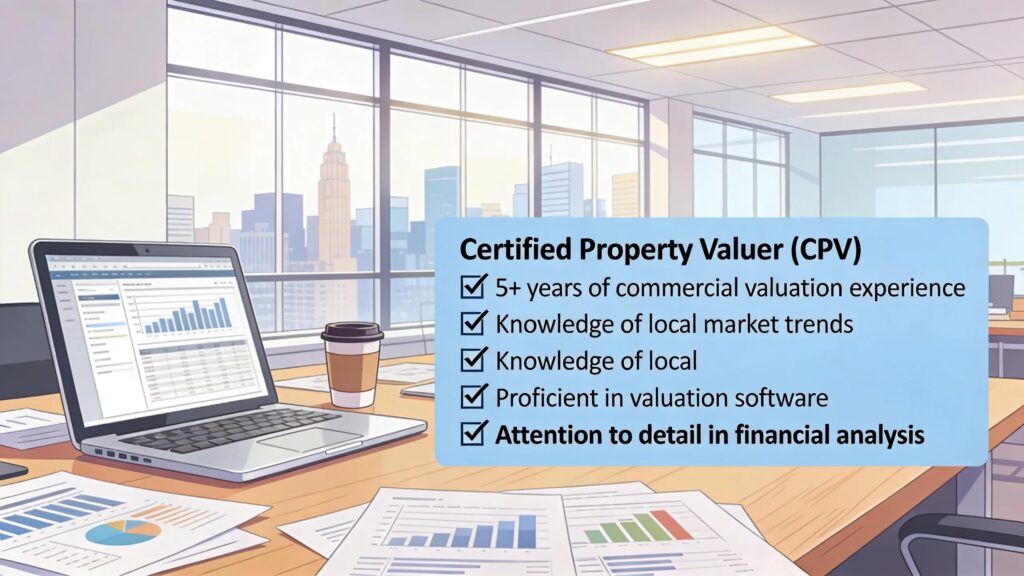
Choose valuers with verifiable credentials and experience relevant to your property type. Proper qualifications reduce risk and improve the accuracy of the final valuation.
- Relevant certifications: Look for credentials from recognized appraisal bodies and licenses required by your jurisdiction.
- Industry experience: Prior work with properties like yours — similar use, size, and market — leads to more nuanced and reliable valuations.
These checks help you select a valuer whose expertise matches your property and objectives.
How can you verify real estate appraiser credentials and experience?
Verify credentials through professional organizations, licensing boards, and direct references. Review sample reports or case studies and ask for client references that reflect similar property types and transaction contexts.
A thorough verification process reduces surprises and clarifies what you can expect from the valuer’s deliverables.
Which professional standards and certifications matter most?
Trusted standards and certifications — such as those from the Appraisal Institute or the Royal Institution of Chartered Surveyors (RICS) — signal that a valuer follows consistent methodologies and ethical guidelines. Those affiliations often mean better-quality reports and industry-recognized practices.
Knowing which certifications to prioritize simplifies vetting and improves confidence in the valuation process.
How can investors and buyers find reliable commercial property valuation services near me?
Finding a dependable valuer means combining local market knowledge with proven technical skill. Use these approaches to narrow your options and find firms that fit your needs.
- Look locally: Local firms familiar with Southeast Detroit’s market dynamics can offer more precise, context-aware valuations.
- Check service scope: Confirm the firm handles property types and services you need — from standard valuation to environmental testing and specialized inspections.
These steps help you find a valuation provider who understands both your property and the local market forces that affect value.
What local factors affect the choice of commercial property valuation services in Southeast Detroit?
Local zoning, redevelopment plans, tax incentives, and neighborhood trends all affect valuations. A valuer who knows Southeast Detroit’s regulations and economic drivers will produce more accurate, actionable reports.
Choosing someone with local insight reduces the risk of missing market-specific factors that influence value.
Which resources and indicators help identify trustworthy valuers in your area?
Turn to client testimonials, industry affiliations, and local real estate boards to evaluate a valuer’s reputation. Confirming credentials and asking for recent, relevant references will further validate their reliability.
These indicators make it easier to shortlist valuers who consistently deliver quality, reliable assessments.
How should you interpret and use commercial property valuation reports?
Valuation reports are decision tools. Read them with an eye to structure, assumptions, and highlighted risks so you can apply the findings to pricing, financing, or negotiations.
- Understand the layout: Learn where to find key assumptions, comparables, condition notes, and cost estimates in the report.
- Value clear documentation: Transparent explanations of methods and assumptions make it easier to rely on the valuation in negotiations and financing.
Armed with this understanding, you can use reports to guide offers, counteroffers, and long-term planning.
What critical information is included in valuation and inspection reports?
Typical reports include property details, market context, comparable sales or income analyses, and condition assessments of key systems. They may also recommend repairs or list items that affect marketability and value.
Knowing these elements helps you turn a report into a practical action plan during a transaction.
How can clear reporting transparency improve your property investment decisions?
Transparent reports build trust and reduce negotiation friction. When assumptions and findings are well-documented, buyers and lenders can act with more confidence, and sellers can justify pricing. Clear reports also help prioritize repairs and forecast holding costs.
That clarity smooths transactions and supports smarter long-term investment choices.
What are the costs and considerations when choosing a commercial property appraisal service?

Commercial valuations are more complex than typical residential inspections and often cost more as a result. Budgeting depends on scope, property size, needed tests, and the level of analysis required. For basic residential needs, you might compare home inspection pricing, but expect commercial work to require additional time and expertise.
- Cost drivers: Scope of work, environmental testing, and specialty reports (e.g., structural engineering) all raise fees.
- Ask for upfront pricing: A clear breakdown of expected costs helps avoid surprises and lets you compare quotes accurately.
Knowing what affects price helps you choose the level of service that balances risk, accuracy, and budget.
How do inspection scope and environmental testing affect valuation service costs?
Broad inspections and environmental testing raise costs because they require specialists, lab work, and more time on site. If a property has known or suspected environmental issues, include those tests early in the scope to get accurate valuation results and avoid hidden liabilities.
Understanding these cost drivers helps you decide which tests are necessary for a reliable valuation.
What questions should you ask to ensure valuable service within your budget?
Ask prospective providers about:
- Service scope: Exactly what is included in the valuation and inspection deliverables?
- Potential extra costs: What additional tests or services might be required based on common findings?
Clear answers to these questions let you compare providers on value and fit, so you can get the right level of service without surprises.